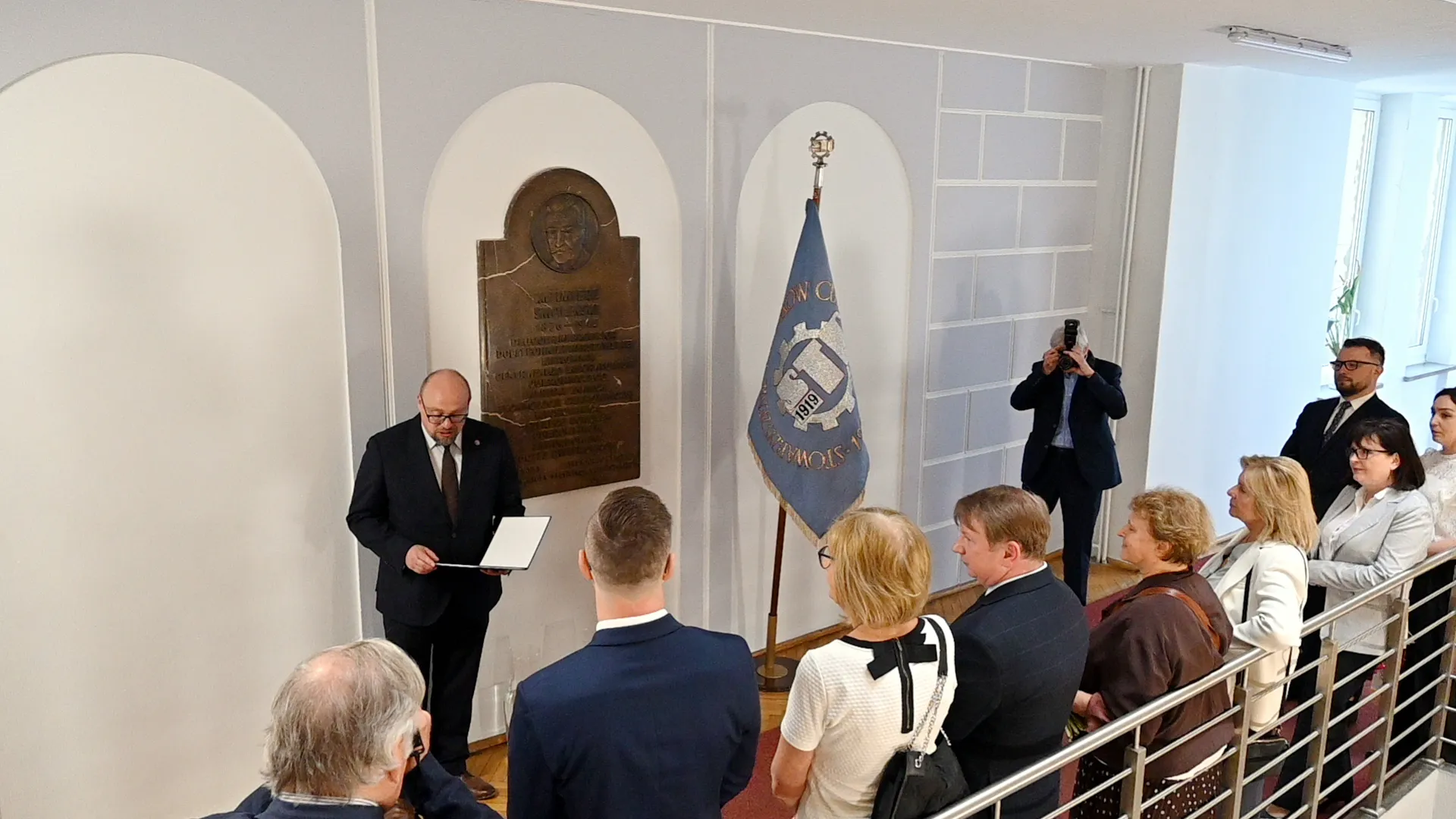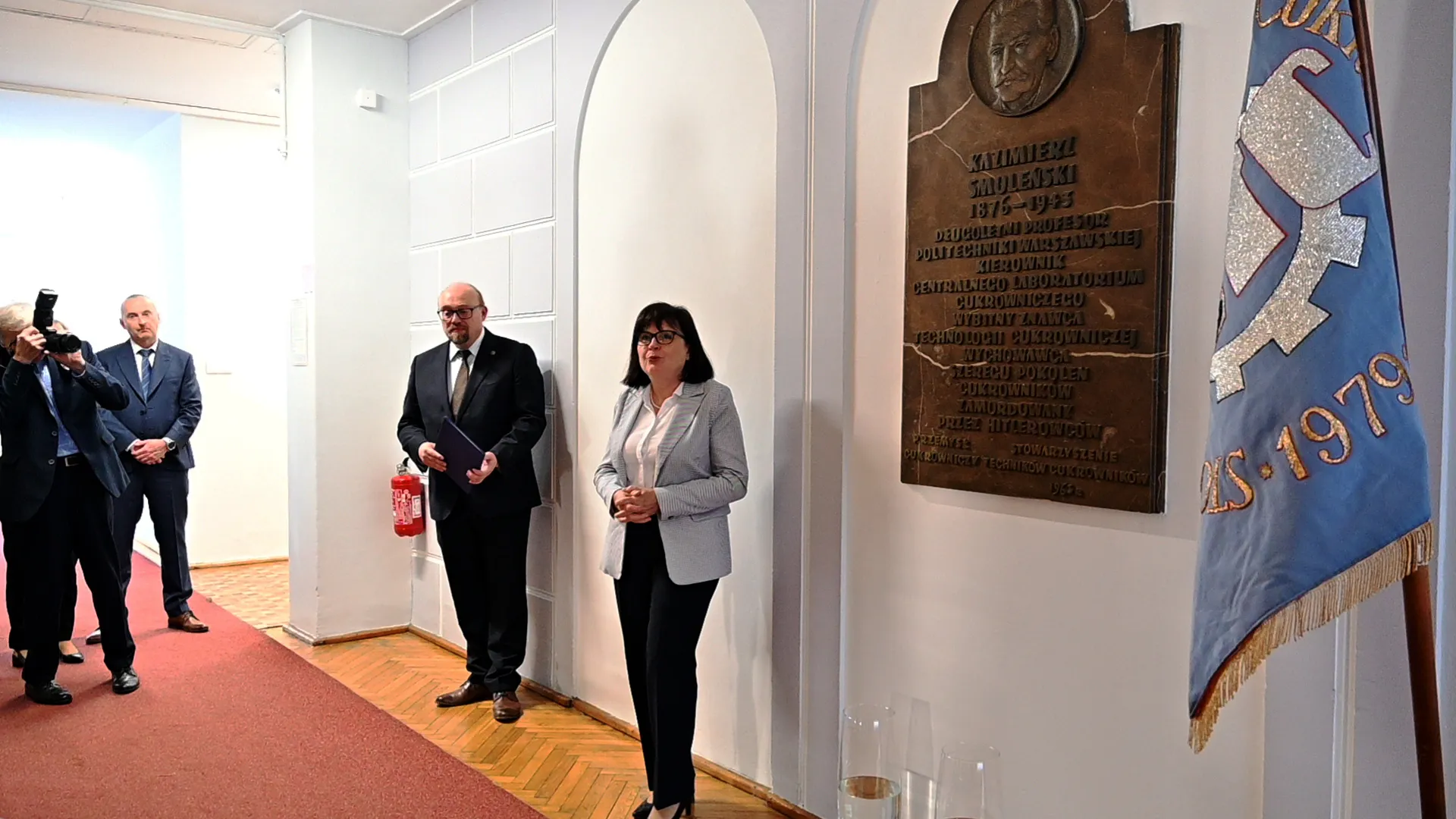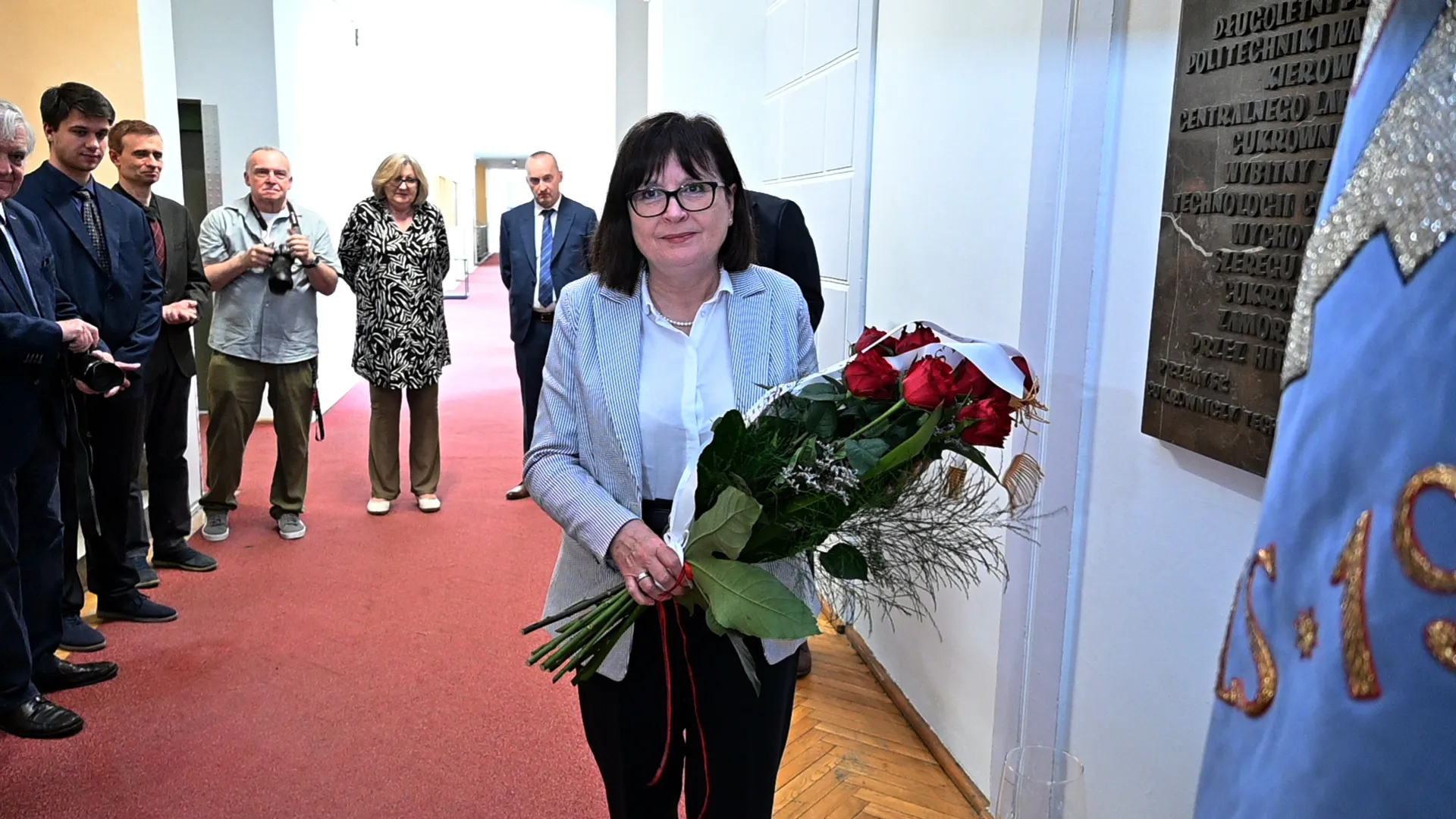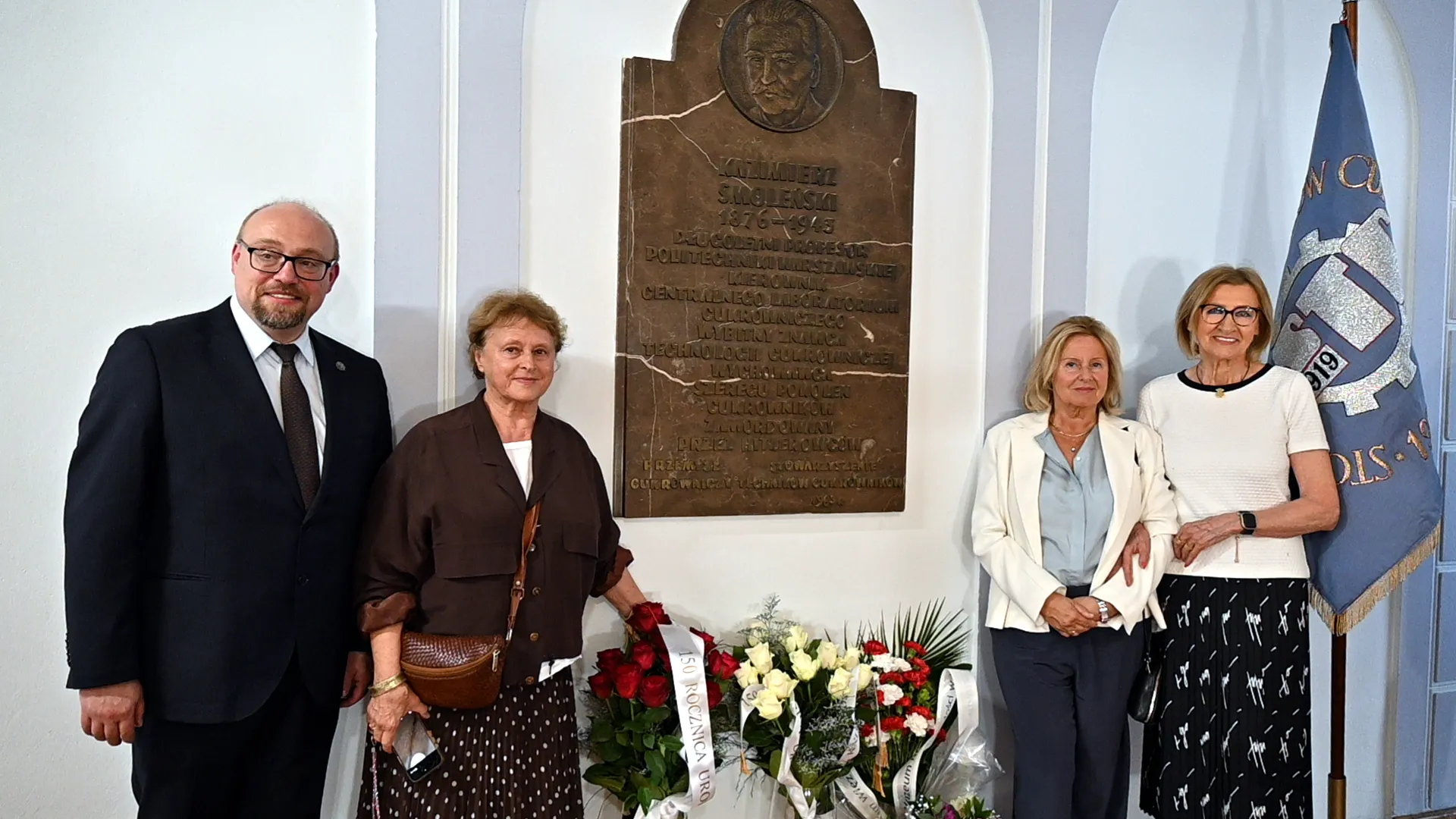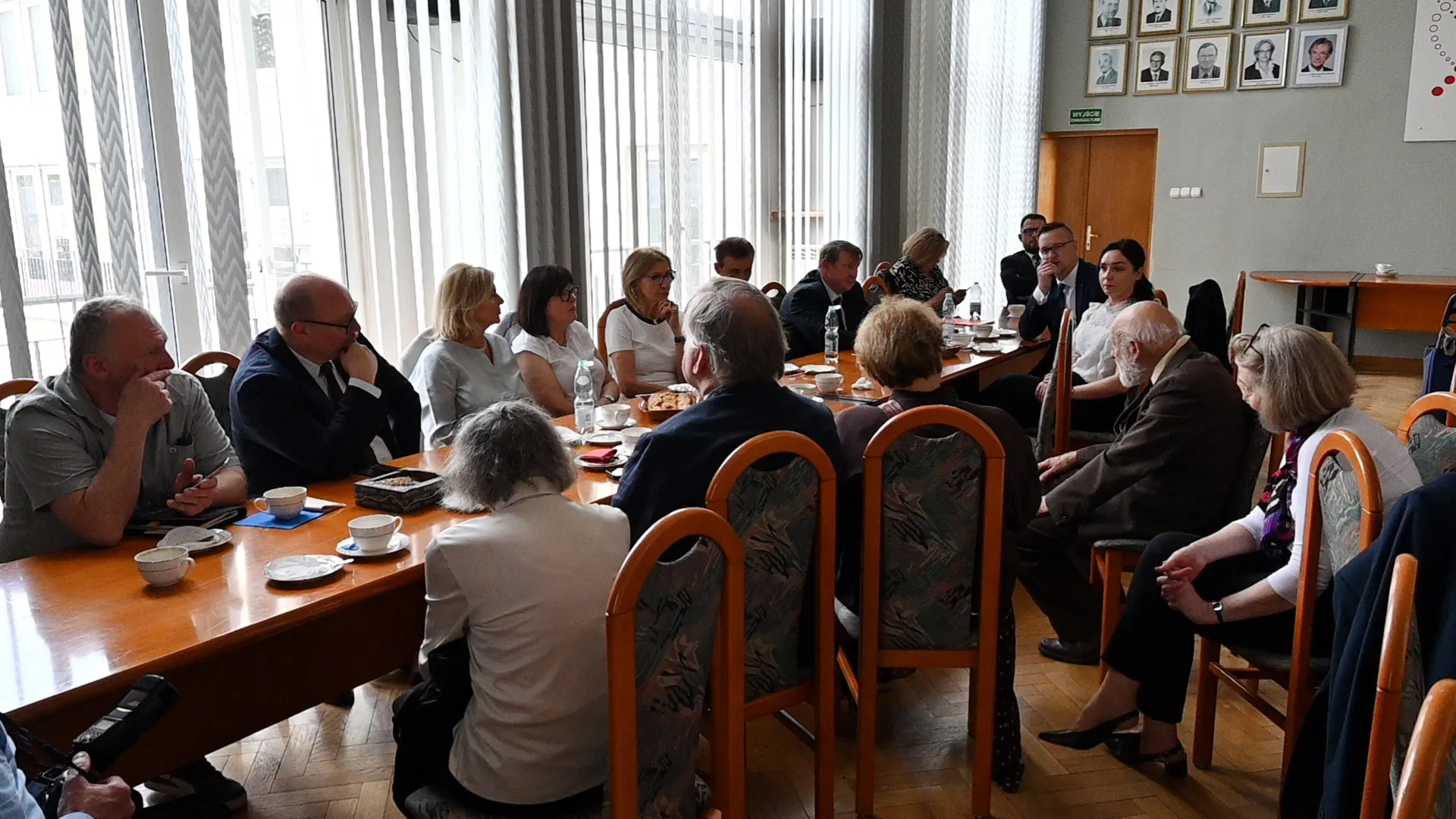
On May 6, 2026, at the Institute of Agricultural and Food Biotechnology in Warsaw, a ceremony was held to celebrate the 150th anniversary of the birth of Professor Kazimierz Smoleński (1876–1943). The event, organized by the Association of Sugar Technologists, brought together representatives of the scientific community, the sugar industry, and the Professor's family to pay tribute to one of the most prominent Polish chemists and technologists of the early 20th century.
For the community of the Polish Chemical Society, this ceremony had a special dimension, because Prof. Kazimierz Smoleński was not only an outstanding authority in the field of sugar chemistry and sugar technology, but also served as the President of the Polish Chemical Society in 1935.
On behalf of the Presidium of the Main Board of the Polish Chemical Society, Prof. Sławomira Skrzypek participated in the ceremony, whose presence highlighted the continuity of the Society's tradition and the significance of Prof. Smoleński's achievements for subsequent generations of chemists.
The ceremony was opened by the President of the Association of Sugar Technologists, Prof. Maciej Wojtczak, who welcomed the gathered guests and then presented the biography and the incredibly rich scientific and organizational achievements of Prof. Kazimierz Smoleński.
The guests of honor also included:
- the Professor's granddaughters: Ms. Barbara Niewiadomska and Ms. Joanna Komorowska with her husband,
- Ms. Joanna Gierczyńska, Head of the Pawiak Prison Museum,
- Prof. Marek Roszko, Director of the Institute of Agricultural and Food Biotechnology,
- Mr. Michał Żero, a sugar maker, son of Professor Smoleński's student,
as well as representatives of the sugar industry — members of the Association of Sugar Technologists, including employees of the National Food Group (Krajowa Grupa Spożywcza S.A.).
The main point of the program was the ceremonial laying of flowers at the memorial plaque dedicated to Prof. Kazimierz Smoleński. This plaque was funded by the Association of Sugar Technologists in 1963, on the 20th anniversary of the Professor's death. Tribute to the outstanding scientist was paid by laying flowers by:
- On behalf of the family: the Professor's granddaughters – Ms. Barbara Niewiadomska and Ms. Joanna Komorowska.
- On behalf of the Polish Chemical Society: Prof. Sławomira Skrzypek, member of the Presidium of the PTChem Main Board.
- On behalf of the Pawiak Prison Museum: the Museum's Head, Joanna Gierczyńska.
- On behalf of the Association of Sugar Technologists (STC): STC President Maciej Wojtczak and STC Secretary General Krystyna Wasińska.
Prof. Kazimierz Smoleński was born in Mława and graduated with honors in chemistry in St. Petersburg. Even at an early stage of his career, he combined scientific activity with industrial practice, working in sugar factories and developing research on carbohydrate technology.
After Poland regained independence, he co-created Polish technological science as a professor at the Warsaw University of Technology, where he headed the Department of Chemical Technology and educated subsequent generations of engineers. In 1928–1929 he served as the Dean of the Faculty of Chemistry at the Warsaw University of Technology, and in 1935 — as the President of the Polish Chemical Society.
He was the organizer and director of the Central Sugar Laboratory, later the Sugar Industry Institute, whose traditions are currently continued by the Institute of Agricultural and Food Biotechnology in Warsaw. He was the author of numerous scientific papers and patents, and a pioneer in research on technological processes in the sugar industry, including juice purification, sucrose crystallization, and the utilization of sugar beet industry by-products.
As a scholar with broad interests, he also dealt with organic synthesis, synthetic rubber technology, and the processing of chemical raw materials. During World War II, he conducted secret teaching, remaining faithful to the mission of an academic teacher and scholar. He was arrested by the German occupier during a lecture, and after several months of brutal investigation, executed by firing squad in 1943.
The ceremony in Warsaw was an expression of memory for the scholar, whose scientific, organizational, and didactic achievements are permanently inscribed in the history of Polish chemistry, chemical technology, and the sugar industry.